Showing posts with label Louise Brooks. Show all posts

30 April 2016

Where Did She Go?


Wondering where I've gone? 

I'm still here, busier than ever before (or at least that's how it feels). I haven't forgotten this blog or you dear readers but my schedule is not what it once was. Unfortunately, until I can find some time to sit down and write the posts here will be few. So until I can share more tales with you, please follow me on Instagram or Twitter to see what I'm up to. 

01 January 2016

Hello, 2016!


Hello, 2016! My list of new year's resolutions is long and complex, created with the full realization that most of them will not be achieved but there's no harm in wishful thinking is there? At the top of that list is a resolution to make the most of the next twelve months. No more procrastination—it's time to act (or dance if the occasion calls for it). So lets enjoy 2016 and all the possibilities it brings.

Gif of Louise Brooks from Love 'Em and Leave 'Em (1926). Taken from here.

14 November 2015

Happy Birthday, Lulu!


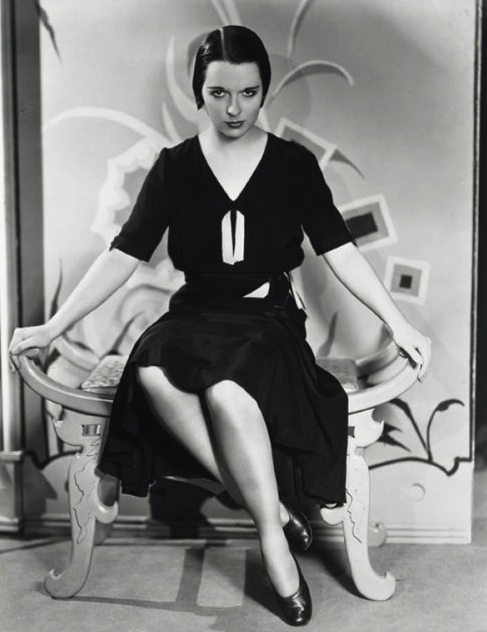
Today is the birthday of one of my role models—Louise Brooks. Born on November 14, 1906 in Cherryvale, Kansas, she conquered New York as a teen, dancing first with the famed Denishawn Dance Company before joining the casts of the George White Scandals and the Ziegfeld Follies. 

When the movies came calling, Brooks answered although she found the whole process rather boring. Usually cast as care-free flappers in light fare, Brooks got the chance to display some serious acting when she played a girl disguised as a boy on the run from the authorities in William Wellman’s Beggars of Life (1928).

With her stick-straight dark bob, pale skin, and lithe figure, Brooks epitomized the new woman of the 1920s. And she also had the flapper’s devil-may-care attitude in spades. Always a rebel, she insisted on living life on her own terms, even when her decisions were detrimental to herself. And so when G.W. Pabst asked Brooks to come to Berlin to make a film, she hightailed it out of Hollywood and headed for Europe where she made Pandora’s Box (1929), Diary of a Lost Girl (1929), and Prix de beauté (1930). Although not a hit at the time, Pandora's Box is now considered one of the best films of German cinema.

 When she returned to the States, Brooks made a few B movies but her career was over, and she faded into obscurity. It would take a few decades before she was rediscovered by film lovers, prompting the French cinephile Henri Langlois to declare, "There is no Garbo, there is no Dietrich. There is only Louise Brooks." In her later years Brooks turned to writing, publishing a well-regarded collection of essays, Lulu in Hollywood, in 1982 before she passed away on August 8, 1985.

I’ve long admired Brooks' talent, her personal code, and her style (one of the reasons why I wear my hair bobbed) so I am happy to say, Happy Birthday, Lulu!

15 August 2015

Time Flies


Wait, it's already the middle of August? And I haven't posted anything this month? What?

I have a list in my notebook of dozens of posts I want to write, including many about exhibits and films that I saw months ago. So why haven't I just written them?

As Dorothy Parker said, "I can't write five words but that I change seven." That, and choosing to watch movies late into the night instead of writing doesn't help matters.

Oh, the horror.

14 November 2014

Happy Birthday, Lulu!


Happy Birthday to the one and only Louise Brooks. Born on November 14, 1906 in Cherryvale, Kansas, she was a dancer, screen star, and writer whose iconic bobbed hair led Kenneth Tynan to dub her "the girl in the black helmet." She lived life according to her terms no matter the cost, even when it meant the loss of her film career. Yet she always remained true to herself and her beliefs. She is and forever will be one of my role models (read more here). So today, let's all raise our glasses and make a toast to Lulu.

06 May 2014

American Cool

Jazz saxophonist Lester Young is credited with popularizing the word “cool” back in the 1940s. Since then it’s become a label that often leads to hotly contested debates over exactly who deserves the moniker. Friday I headed down to Washington, DC and checked out what the National Portrait Gallery thought about the subject with their photo exhibit “American Cool.”

Gathering together images of 100 “cool” Americans, the curators used the following criteria to decide who should make their list (candidates had to fit at least three of the four): “an original artistic vision carried off with a signature style; cultural rebellion or transgression for a given generation; iconic power or instant visual recognition; and a recognized cultural legacy.” Apparently, it was so hard to choose that a "100-Alt list" was created of those who didn't make the cut (it's included at the beginning of the gallery). 

"Bessie Smith" Carl Van Vechten (1936)

"Louise Brooks" Nickolas Muray (circa 1924)

The exhibit is broken up into four sections: “The Roots of Cool: Before 1940,” “The Birth of Cool: 1940-59,” “Cool and the Counterculture: 1960-79,” and “The Legacies of Cool: 1980-Present.” Beginning with Walt Whitman and Frederick Douglass it moves through the 20th century and ends up in the present with Missy Elliott and Johnny Depp.

I was immediately drawn to “The Roots of Cool” section where I found some old friends hanging out—Louise Brooks, Dorothy Parker, Ernest Hemingway (shot by Robert Capa), and Buster Keaton among others. I agreed with their inclusion but thought Clara “It Girl” Bow should have been there as well (she's on the “100-Alt list”).

And so it went, room after room of mostly actors and musicians sparking either a nod of the head (Charlie Parker? Of course. Steve McQueen? So cool.) or a frown (Elvis Presley? He fits the criteria but cool? John Wayne. Um.) And here lies the problem when using the word “cool.” Regardless of the criteria, it’s almost impossible to find a general consensus because it is so personal; everyone has their own idea of who they think is cool.

"Patti Smith" Lynn Goldsmith (1976)

"Bob Dylan, Singer, New York City" Richard Avedon (1965)

What can be agreed upon is that the images in the exhibit were taken by an amazing group of photographers. In addition to the Capa image of Hemingway, there’s James Brown by Diane Arbus, Jon Stewart by Richard Avedon, Malcolm X by Henri Cartier-Bresson, Lauren Bacall by Alfred Eisenstaedt, Great Garbo by Arnold Genthe, Audrey Hepburn by Philippe Halsman, Johnny Depp by Annie Leibovitz, Deborah Harry by Robert Mapplethorpe, H. L. Mencken by Edward Jean Steichen (Mencken, seriously? Mencken was never cool), Georgia O’Keefe by Paul Strand, and James Cagney by Edward Henry Weston.

The day I went there was a lot of discussion going on in the gallery about the people in the photos: who they were, what they had achieved, and who should have been included (or not). The exhibit had sparked a dialogue among the visitors and that's cool. 

“American Cool” is on display at the National Portrait Gallery through September 7, 2014. For more information and a list of the official 100 cool people, visit here.

01 January 2014

A New Year


It's a new year. Time to start moving and make some changes. On my large list of resolutions/things I would like to accomplish this year is to bring you more tales of a madcap heiress and continue to improve this blog. I hope you'll keep stopping by and will let me know what you think. In the meantime, I wish all of you dear readers a wonderful 2014.

Louise Brooks in Diary of a Lost Girl (1929) gif from here.

14 November 2013

Happy Birthday, Lulu!

Louise Brooks by Eugene Richee (1927)

Louise Brooks was born on November 14, 1906 in Cherryvale, Kansas, and became one of the most iconic images of the Jazz Age. She dazzled theatregoers in New York when she performed with the Ziegfeld Follies and the George White Scandals and was the first person to dance the Charleston in London. When she turned to motion pictures, she stole every scene she was in. Her two films that she made in Germany in 1929 with G. W. Pabst, Pandora's Box and Diary of a Lost Girl, are considered masterpieces of the silent era. And her hairstyle, a black bob that Kenneth Tynan referred to as a "black helmet," is one of the most famous hairstyles of the 20th century, copied by women everywhere, including myself. I've long looked up to her as a role model, someone whose "I don't give a damn attitude" I wish I could adopt more often. So Happy Birthday, Lulu! You're the cat's pajamas.  

25 July 2013

500!

Did you hear? This is Michele's 500th post!

What do you know? This is my 500th post! When I first started this blog three years ago, I never imagined I would be able to come up with this many things to post about or that anyone would be interested. So thank you dear readers for stopping by—I couldn't have gotten this far without you. I hope you'll enjoy the next 500 tales. And now, onwards.

Louise Brooks in Just Another Blonde (1926).

12 July 2013

Day 12: A Film With Your Favourite Actor/Actress


Day 12 of the 31 Day Film Challenge: A film with your favourite actor/actress.

Pandora’s Box (1929) with the amazing Louise Brooks. Enough said. 

To find out more about Louise Brooks, read a previous post I wrote about her here. And for more on the 31 Day Film Challenge, visit here.

05 June 2013

Mary Gets a Bob


Everyone knows I’m a fan of the bobbed haircut (I sport one myself). So I was of course intrigued when I came across this image of silent screen star Mary Thurman. Especially when I discovered that she was a Sennett bathing beauty who normally wore curls.

She was born Mary Mervonian Christiansen (nickname Von) on April 27, 1893 in Richfield, Utah. College educated (a rarity for actresses), she received a degree from the University of Utah and became a schoolteacher. She also became a wife, marrying Victor Thurman, the son of Utah Supreme Court Justice S. R. Thurman (they would later divorce in 1919). 

A trip to California in 1915 changed her career and life when her good looks got her the attention of a talent scout. She had two uncredited parts in the Douglas Fairbanks vehicles The Lamb and Double Trouble but it was the approval of Mack Sennett that was her real break.


Mary became one of Sennett’s famed bathing beauties, primping for the camera along side other lovelies usually at the seaside. For the next three years she also stared in a series of Sennett produced comedy shorts, often with Sennett stalwart Charles Murray.


In 1919 she moved up to features, starring in the unfortunately titled The Poor Boob for Famous Players-Lasky. She would go on to make 35 more films and work with the likes of Mae Murray, Gloria Swanson, Betty Compson, Richard Barthelmess, Tyrone Power Sr., and Harrison Ford.


One of her better films was Sand (1920) with legendary cowboy William S. Hart who chose the script personally. In it Mary plays the love interest of Hart, a railroad station agent who after being falsely fired by his rival for her affection must capture a gang of bandits to redeem himself. The film is pretty good including some strong performances and great on-location shots. You can watch the entire film here.

Another important film of Mary's was one that her fans at the time never saw. Leap Year (1921) stared the popular comedian Fatty Arbuckle who plays the heir to a large fortune, which draws the attention of attractive women who distract him from the woman he’s in love with, his uncle's nurse played by Thurman. Unfortunately, filming finished right before Arbuckle’s infamous trip to San Francisco that resulted in the comedian being charged with the rape and murder of actress Virginia Rappe (he was later acquitted). Leap Year was subsequently banned and didn't see a release until 1981.


One of the other noteworthy tidbits about this film is that Mary appears in it with a sleek, straight bob, a look normally associated with Louise Brooks. In an interview with Adela Rogers St. Johns, Mary explained her new look saying that she had gotten her hair wet at the beach, which flattening her curls, and that her friends had told her it looked good and she should wear it that way. Normally pictured with a head of chestnut curls the new hairstyle, which Mary added bangs to, altered her appearance (her face even looks different) and gave her a classic flapper look.


The hairstyle made a big impact. One illustrator was inspired to capture the new look with a result that screams 1920s, right down to the bee-stung lips, while famed photographer Alfred Cheney Johnson saw her as the French Dauphin (or maybe he had Joan of Arc on the mind). 


Mary continued to work steadily, proving to be at home in both comedies and dramas. In 1925 she travelled to Florida to film Down Upon the Suwanee River. In it she plays a young woman who faces condemnation for giving birth out of wedlock although she really is married to a man who has been run out of town for espousing Atheism. All is well though when he finds God and returns home to wife and baby.

But all was not well for Mary. During filming she contracted malaria. She became deathly ill and retreated to New York where her friend and former Sennett Bathing Beauty, Juanita Hansen, took care of her. Mary never recovered though and after contracting pneumonia died on December 22, 1925. She is buried in Utah.

I'd like to find out more about Mary and watch some of her other films like Leap Year. And all because of a picture of a woman with a bob that caught my attention.

24 April 2013

A Day in San Francisco


Last week I was in California for a much needed break. I stayed with my parents and got to hang out with them along with my siblings and nephews as well as a few friends. And after the first couple of days, the weather was lovely, reminding me why so many people flee to the West Coast. 


During my trip I spent a day in the Castro and Mission Districts of San Francisco visiting some friends and walking down memory lane. The Castro is the biggest gay neighbourhood in the country and is filled with restaurants, bars, shops, and one of my favourite places, the Castro Theatre. Since 1922 this jewel of a movie palace has entertained generations of San Franciscans. This was the place where I first saw Louise Brooks on the big screen, where I viewed my first silents in fact accompanied by live music courtesy of the mighty Wurlitzer organ (the song "California, Here I Come" would usually be performed right before a movie started with the audience clapping along), and where I sat through countless foreign films and special screenings. Today it is also home to the San Francisco Silent Film Festival, which I've flown out to attend in the past. The theatre is an absolute beauty and if you're ever in the city, I encourage you to go see whatever is playing. 

Though many of the businesses were different some things, like the iconic Twin Peaks sign, remained the same. And if you're wondering about all the overhead wires, they are used by many of the city's trolleys and buses.


While I was there, I had lunch with a dear friend during which we chatted for a long time over copious amounts of Thai tea. I got to see her darling new apartment, which is filled with original arts and crafts details and decorated just perfectly. Afterwards I took my time walking over to the Mission, admiring the houses along the way. From small Edwardians to the tall iconic Victorians, the colourful houses light up the city and give a neighbourhood character.


It's the little details that truly make the houses special. Sunbeams both large and small, for example, make multiply appearances while others have their own unique detail like a peacock above an entryway. Even the plants and trees add to the houses' appeal like this cherry blossom tree that looks amazing set against the faded pink siding of a house.


Walking down 18th Street, I spotted the Spanish Baroque style tower atop Mission High School, its design a nod to the state's past. The palm trees that line Dolores Street were another symbol of California while its native poppies were confined to ones found at a flower stand.

When I lived in the Mission many years ago it was largely Hispanic with loads of bodegas and tacquerias (Pancho Villa was my go-to place for burritos). While many of those places remain, they are now joined by bistros and bakeries and clothing shops that I wish had been there when I was a resident. One of which is Tartine, a bakery that I had read a lot about. So with time to kill before meeting another friend, I stopped in for an espresso and slice of chocolate tea cake. It was delicious and with a window seat at my disposal, I sat for an hour writing in my notebook and people watching.


Afterwards, it was drinks and small plates of Southern Indian treats at Dosa with another dear friend who I've known since middle school. All in all, a perfect way to spend a day in the city by the bay.

Photos by Michele.

05 February 2013

400 and Counting


This is blog post number 400! I can't believe I've posted that many. It makes me so happy, I feel like dancing. A big thank you to each and everyone of you who's stopped by to see what's going on at Tales of a Madcap Heiress. Here's to the next 400. In the meantime, let's dance.

Gif of Louise Brooks dancing in Pandora's Box from here.

14 November 2012

Happy Birthday Lulu!

Louise Brooks. Photo: John Springer Collection/CORBIS.

Happy Birthday to my favourite flapper, Louise Brooks. Born on November 14, 1906 in Cherryvale, Kansas, she was a star of both stage and screen. Louise left an indelible mark on film history with her portrayal of Lulu, the beautiful seductress who destroys the men who cross her path in Pandora's Box (1929). She also inspired generations of women to copy her hairstyle, including me. So here's to the woman who was the bee's knees. May her star continue to shine bright.

27 September 2012

Lulu Speaks


Praised for her silent films, you usually don’t associate Louise Brooks with sound. But she did make a few second-rate talkies before finally calling it quits in Hollywood. There are some interviews with the actress later in life in which she talks up a storm but they aren't the same as hearing a young Louise speak in a black and white film.

Her first speaking role was in
 Windy Riley Goes Hollywood in 1931. A comedy short, it's the story of braggart Windy Riley (Jack Shutta) who, while in a race from New York to San Francisco, accidentally ends up in Hollywood where he finds himself in the publicity department at a movie studio assigned to help revive the career of the studio’s star Betty Grey (Louise Brooks) who’s been receiving some bad press. His efforts lead to near disaster but in the end Riley manages to save the day.

This film
would be forgettable today if not for two things. First is director William Goodrich who was none other than Fatty Arbuckle, the great comedian who was unjustly accused of killing actress Virginia Rappe in 1921. After the scandal the disgraced Arbuckle was forced to use a pseudonym if he wanted to work hence William Goodrich.

Then there is Louise Brooks. While the part of Betty Grey isn’t much, you get to hear Louise's v
oice for the first time. She appears to hesitate a bit, like many actors did in the early days of sound, but the quality of her voice is just fine, clear with perfect diction. She is lovely as ever in the film even though she appears without her trademark bangs (something that I never get used to). You also get to see a snippet of her dancing, which is a huge bonus.

The film
is an extra on the Kino DVD of Diary of a Lost Girl (1929). But you can also watch the full film here. So if you haven't heard Louise speak, check it out and enjoy!

LinkWithin

Related Posts Plugin for WordPress, Blogger...